The autonomous cars disruption
Self driving cars just might have an impact big enough to transform the way we live inside (and outside) cities, completely disrupting the economy as we know it.
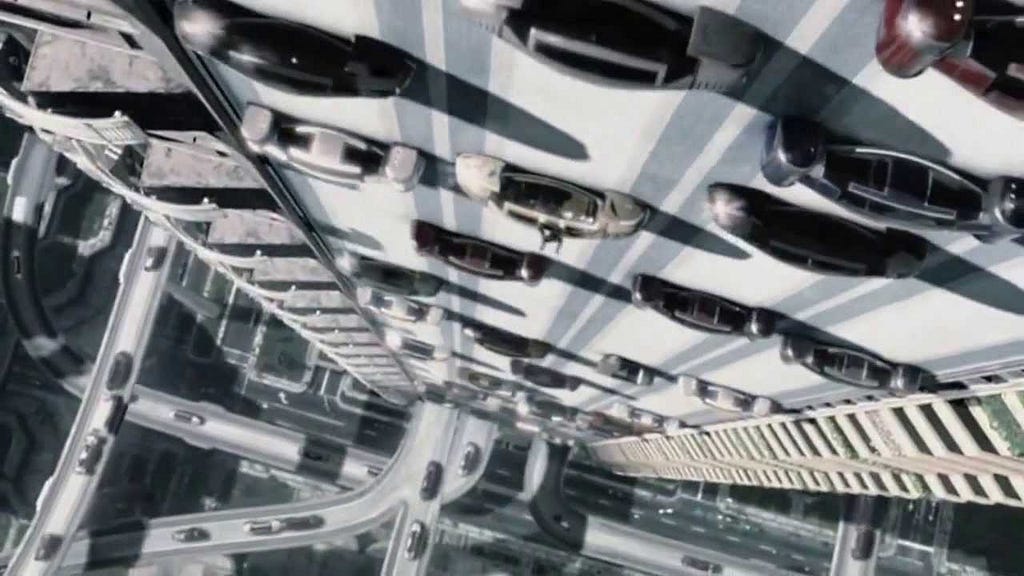
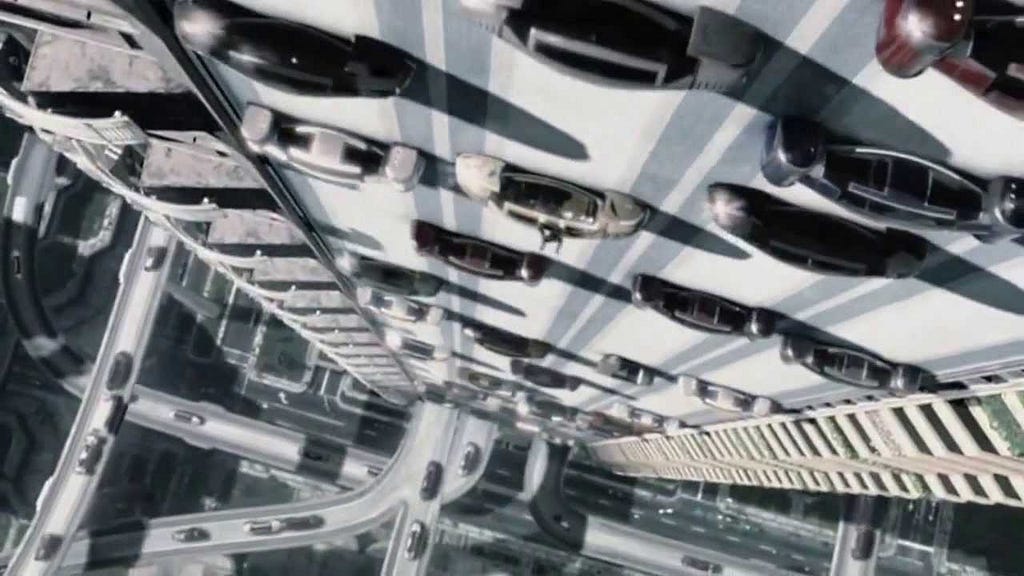
Movie makers love to fly with the imagination. Especially with cars. Perhaps the most famous flying car, “Back to the Future”‘s delorian (by a car manufacturer went bankrupted just before the movie came out) never came to be, yet other Hollywood sci-fi cars predictions are about to become true: Tom Cruise’s car in “Minority report” was a self driving car, and even though Schwarzenegger’s taxi was never self driving in “Total recall” (thanks to a future Siri compatible driver), their idea was the same: autonomous cars.
Autonomous cars technology already exists, currently in an advanced state of development to be commercial. Google, Uber, Intel (by recently purchased mobileye) and other companies, are all racing to be the 1st out to market, as on road experiments and regulators are also advancing rapidly. The possible solution for one of the modern era’s biggest everyday problems: traffic, and the billions of dollars worth market to be held by achieving the solution is driving it all forward. The possible implications on modern day arr almost ungraspable
1st of all, stating the obvious, driverless cars frees the driver from driving. Freedom from actual driving, spares time that can be used for pretty much any other activity. An activity limited to sitting, but then, office work falls under that same category too.

2nd of all, there will be less of a need for cars ownerships for households. An autonomous car can take you to work, then come back home, wait at home to pick up the kids from school, then send them off to different activities and by the end of the day return to pick you up from work, and so on. Furthermore, cars will be far easily rented per usage, rather then be owned, should more than one car at a time be necessary. Any owned car could be rented. This is Uber and Lyft’s biggest business goal via the economics of sharing model (should they survive until the technology will hit mass market).
If today road usage can be explained by Parkinson’s law: when cheap (even free) supply exists, demand will grow to match, then derived road usage will also act based on the same principle: free extra seats supplies by car owners will exists, and then filled. Cars owners will either be private people (but less) being able to rent their extra car seats, or car leasers that will rent entire cars fleets, per usage
As a result, we’re expected to witness the complete disruption of the public transportation markets: buses, taxis and car rentals. Car sharing mechanism will encourage car pooling, simply by the incentive for a car owner to rent his (or hers) extra seats on the way to work. Toll free roads for car pooling regulation, should it happen, will encourage car pooling even more. Traffic will decrease and average speed on the road will increase. On the other hand, should the need occur, car rentals per usage will replace taxis either for inner city travel or for weekend trips, for example.
Assuming rental per usage be cheap enough, public transportation would have to be re-invented: buses on main routes will have to sync with each other, and alter courses based on passenger demand. As they should keep an added value in comparison to car rentals, they will remain active in cities only where traffic will not be decreased enough because of per usage rentals, more so if local governments (or municipalities) will intervene to prioritize them on the roads.
Economic changes will not stop in the transportation markets:
The direct economic effect on employee output and on leisure activity markets (as alternatives to the same time freeing up) is huge. Let’s say an hour as day is freed up from traffic time, for any traffic jammed employee, per work day, and all of the time saved will be allocated to work. Assuming an 8 hour work day, labour output will increase by 12.5%. Average labor cost will drop (more labor supply for the same demand for work), and as a result, output surplus will encourage more investment in capital, to tale better advantages of the extra labor. Demand for leisure is harder to assess, but as an alternative to work, we can price it similarly.
As cars as a cause for major energy consumption today, the autonomous car may pose a threat to energy providers. Initially since more passenegers per engine will increase making driving more efficient.
The possible other effect of far cheaper transportation costs may work in the opposite direction: more passengers for more distnat places,making energy use more efficient, though not necessarily lower. Though that might take some time to be adjusted, and won’t necessarily compensate the energy industry for energy saving.
But the really big economic change will be on a far larger scale. Less time on the road means a bigger capacity for roads and transportation in general, resulting in bigger Metropolitan areas radius: more people will be able to mobilize to further lengths during the same amount of time. Metropolitan areas advantage of scale will encourage more people to do so
That doesn’t have to mean more crowded cities, but may mean quite the opposite: it will be simpler for individuals living in rural areas to get access to metropolitan services (health, food, etc), and of course to find work.
Who will need to have a local theatre, if you can take a car further away to watch a show somewhere else ? and that goes the other way around – going to a restraunt that has just stopped from being in the middle of nowhere, to become “just around the corner” ?
City planning will have to change from the ground up.
Sci fi living here we come…
Continue reading: The autonomous cars disruption